
Samsung to stop Netbook production, focus on Ultrabooks – The Ultrabooks are coming: Does Samsung stop its Netbook production in 2012?
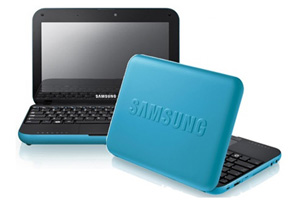 An e-mail to the sales partners of the enterprise possibly points to this suggestion. The content of that mail point to an abandoning of Samsung`s Netbook production starting from 2012. The email was emerged first on the French Internetblog „blogeee.net “.
There, it is suggested that Samsung is about to give up the Netbook production of the format 10.1 in the first quarter of the new year in favor of the formats 11.6 and 12 with series of „Ultrabooks“.
„The Ultrabooks“ represent thus in fact somehoe a PC version of Apple`s MacBook air. The background for the possible change of strategy at Samsung is the fact that Netbooks have decreased in sales on the market.
If you want to read more about topics like Samsung to stop Netbook production, focus on Ultrabooks, we would like to welcome you to our Newsfeed. Pic (c)
My old netbook got me through a couple of years of lecture notes — cramped keyboard, slow to wake, but it fit in a bag. Seeing Samsung drop the line for Ultrabooks feels like the end of a very specific era. Almost everyone I knew with one eventually swapped it for something thinner anyway.
This week’s small chore was an expense claim. The portal wanted a „scanned“ document, not the clean digital PDF our system exports, so I printed the receipt, signed it, photographed it, and ran it through lensup.ai to turn the photo into a PDF the right shape and size. Processing happens locally in the browser tab, nothing gets uploaded, which I cared about since it had my card details on it. The compression aims at the size you pick and can land a bit over, but the form accepted it.
Der Wechsel von Netbooks zu Ultrabooks war absehbar, ganz verschwunden ist die Kategorie aber nie — sie ist nur in günstigere Tablets und Chromebooks abgewandert. Auffällig finde ich, dass die kleinen 10-Zoll-Geräte damals vor allem für leichtgewichtige Anwendungen genutzt wurden: Textverarbeitung, Mail, Browser. Wer heute ein schlankes Einsteigergerät besitzt, kann damit problemlos im Browser spielen, ohne etwas zu installieren. Genau dort lohnt ein Blick auf kostenlose Visual Novels im Browser: eine kuratierte Sammlung mit Romanzen-, Otome- und Horrortiteln, jeweils mit Screenshots, kurzer Rezension und direktem Play-Link, ohne Download und ohne Anmeldung. Auf schwacher Hardware ist das praktischer als jedes native Spiel. Dass Samsung 2012 trotzdem auf die teurere Ultrabook-Schiene setzte, zeigt vor allem, wie stark Marge und nicht Nutzung die Produktpolitik bestimmt hat.
Samsung’s retreat from the 10.1-inch netbook in favour of Ultrabooks reads, in hindsight, as the moment the cheap laptop stopped being a productivity tool and became a consumption device. What strikes me is how many of those little machines ended up in craft rooms rather than offices — slow, cramped, but perfectly adequate for browsing patterns and nudging vector paths around, which is exactly what a vinyl cutter workflow demands. That niche never died, it just migrated to tablets and Chromebooks. For anyone still cutting on modest hardware, a browser-based free printable stencil library covers the conversion side, turning a photo or a line of text into cut-ready linework with SVG and DXF export. No install required, which was always the netbook’s one genuine advantage.
Funny how the shift from netbooks to Ultrabooks mirrored a broader move toward browser-based tools — lightweight, instant, and privacy-respecting. Speaking of which, if you enjoy gesture-controlled creativity right in your browser (no install, no account, camera processing stays local), check out GestureSynth.me — it turns hand movements into chords, loops, and theremin-style pitch, with WAV export and guided practice. Free, open, and surprisingly expressive:
Try GestureSynth.me
The netbook-to-Ultrabook pivot reads less like a format dying and more like the low end being abandoned rather than replaced — the 10.1-inch machines were slow, but they were genuinely sufficient for text, mail and the browser. That last point is what stuck with me, because a browser is now the whole machine for a lot of cheap hardware. On a modest laptop or even a tablet, a free Wikipedia link-racing game runs fine with no install and no account: you race between two articles using only the in-page links, with 300 levels, star ratings, daily challenges and 1v1 ranked Elo rooms. It is a nice illustration that lightweight browsing tasks are exactly what these devices were always good at.
The retreat from 10.1-inch netbooks toward Ultrabooks always struck me as more about margin than capability — those little machines handled word processing, mail and a dozen browser tabs perfectly well, which is still most of what anyone does on a laptop. What has shifted since is that a lot of that browser time is now games, and they need almost no local horsepower. Roblox runs acceptably on integrated graphics; the real bottleneck is usually knowing what to do in-game rather than frame rates. For anyone playing Slayers 2, having working Slayers 2 redeem codes and clan roll odds at hand matters far more than a spec sheet, which is the gap the slayers2wiki fan guide fills with breathing styles, trainer locations, clan roll odds and a live player counter, refreshed every patch. Cheap hardware plus a well-maintained wiki beats a premium chassis every time.
If you miss the simplicity and tactile joy of early portable computing—but want something far more dynamic than static hardware—check out Sandboxels.cc. It’s a browser-based falling-sand simulator with 85 interactive materials (sand, water, fire, circuits, plants, gases) that flow, react, conduct, and evolve in real time—no install, no sign-up, all local. Build volcanoes, logic gates, ecosystems, or just watch physics unfold. Perfect for tinkerers, educators, or anyone nostalgic for the *spirit* of netbooks: lightweight, open-ended, and deeply playful. Try it now:
Sandboxels.cc
Samsung’s possible move away from 10.1-inch netbooks toward 11.6- and 12-inch Ultrabooks reflects how quickly consumer priorities were changing. If declining netbook sales are driving the decision, it raises an interesting question: are buyers rejecting the small-screen format itself, or simply expecting better performance and design in similarly portable devices?
Dropping the 10.1-inch netbook format in favor of 11.6 and 12-inch Ultrabooks shows how consumer preferences evolved. Netbooks had their moment, but they couldn’t compete once real performance in a slim package became possible. On a random note, nano banana 2.5 helped me design a laptop evolution timeline—the netbook era was short but influential.
条理清楚,读完对选型更有把握了。. I sometimes mock visuals for notes with gpt image 2 when I need sharp text in an image.
Samsung’s move away from netbooks toward Ultrabooks was really about shifting priorities — thinner, faster, more capable machines. It’s a reminder that the tools we use keep evolving, and the same is happening with creative software. For those exploring new workflows, AI image generation for Claude users has become a genuinely useful option, letting you create visuals directly from text or reference images without leaving your conversation. Platforms built around this idea now support multiple models for both text-to-image and image-to-image work, which makes experimenting with different styles much easier. Worth checking out if you want to see where creative tooling is heading next.
Nice Amazing Post
The shift from a 10.1‑inch netbook to 11.6‑ and 12‑inch Ultrabooks signals Samsung’s pivot toward premium thin‑and‑light devices, mirroring Apple’s MacBook Air strategy. This move reflects the broader market decline in netbook sales and a focus on higher‑margin, performance‑oriented laptops.
You can check Pokemon type matchups without pulling up a chart every time.
Interesting look at Samsung’s shift from netbooks toward thinner Ultrabooks. The broader pattern still feels familiar: as hardware gets lighter, the software layer has to make more context-aware decisions. I have been exploring that angle with API endpoint, which turns shared state into typed, probability-backed decisions for routing and scoring.
The move from netbooks to Ultrabooks also marked a shift toward lighter, browser-first workflows. Today, long-context tools like Home make it practical to work with large documents, images, and code without installing a heavy local stack.
The article notes that Samsung plans to drop its 10.1‑inch netbooks in Q1 2012 and shift to 11.6‑ and 12‑inch Ultrabooks, mirroring the MacBook Air’s form factor. This pivot reflects the broader market trend of declining netbook sales, suggesting Samsung is prioritizing premium, lightweight laptops over low‑end devices.
Tool and source are both here: https://pdfdark.org
I remember when netbooks were the cheap way to get online on the train, and it does look like that whole tier is getting squeezed out. Samsung chasing Ultrabooks makes sense commercially, though it leaves a gap for anyone who just wanted something small and inexpensive — thin-and-light was clearly where the money was heading by 2012.
Oddly, the story sent me back down a rabbit hole I’d fallen into about AI and the p(doom) meme. I ended up working through a fan-made guide to a song about it, the pdoomvideo one, mostly the glossary, since half the jokes are acronyms, and I skimmed the 10-step guide and the lyrics explained section. Which was honestly a more interesting way to spend an evening than reading about laptop lineups.
Interesting throwback piece. Today most of those old devices would end up in an attic as collectibles; tools like Antique Value Checker can now identify antiques and vintage items from a photo and estimate their age, origin and market value. Tech history ages faster than we think.
Samsung’s move away from netbooks toward Ultrabooks is a reminder that hardware shifts often push users toward lighter, browser-based tools. I remember squeezing lecture notes onto a cramped 10-inch keyboard, and even then the real bottleneck was always software, not specs. That same logic applies to academic work today: you can draft on anything, but the submission step is where things get strict. Running a paper through an AI checker by Turnitin before uploading has saved me from nasty surprises more than once, since detection flags rarely care how old your laptop is. Thin machines, cloud tools, and stricter review standards all point the same direction, and it pays to check your work early rather than after the deadline.
Interessanter Rückblick auf das Ultrabook-Zeitalter. Am Ende war es gut, dass die Hersteller die Geräteklassen sauber unterscheiden – beim Kauf zählt trotzdem der strukturierte Vergleich: Display, Gewicht, Preis, Akku. Solche Abwägungen als Choice- und Score-Fragen mit klaren Antworten zu formulieren, funktioniert übrigens auch jenseits der Hardware, etwa mit Entscheidungstools wie Decisions API. Danke für den Artikel!
Funny how 2011 was supposed to be the year of Ultrabooks — a decade later the ultrabook concept just became… every laptop. Netbooks died because tablets ate their niche almost overnight, exactly as this piece anticipated. I work with modern AI benchmarks (my Jev Benchmarks site compares models the way reviewers once compared netbooks), and the same pattern repeats: a category gets defined, gets commoditized, and folds into the mainstream within a few years. Great snapshot of the transition.
Funny reading this in hindsight – the netbook segment died exactly as the industry predicted and ultrabooks absorbed it. We went through a similar portfolio-pruning call on the software side recently; the Decision API Resources library has a useful comparison guide for deciding which tool categories to consolidate. Dropping netbooks when Intel did turned out to be the right move.
Seeing this shift away from netbooks brings back memories. Those little machines were painfully underpowered for any kind of media work, and it really took the push toward ultrabooks to make portable editing setups practical without carrying a massive brick.
It is wild thinking about that hardware struggle now that so much heavy lifting happens in the browser. Lately I’ve been feeding start and end frame references into Kling 4.0 for quick tech-desk transition cutaways on my laptop; keeping the camera motion prompt subtle usually keeps the hands and keyboard edges from warping.
Looking back from 2026 this call looks even better than it did at the time: netbooks died out, ultrabooks became the default, and Samsung rode that wave well. What strikes me is how much of these product decisions used to be gut feel. Today teams can run structured comparisons through tools like Decision Models before committing a roadmap, scoring each option instead of arguing about it. Interesting to revisit the announcement that basically defined the laptop decade. Thanks for keeping this archived!
The shift from netbooks to Ultrabooks was really about thin-and-light becoming the norm, and that same „do more with less“ mindset is everywhere now. I still edit on a modest laptop, and what saves me is an AI video to short video tool that turns a long recording into vertical clips with captions, ready for YouTube, TikTok or Facebook, no watermark and no card needed to start. The free account gives you three clips, which is enough to see if the workflow fits before committing. Funny how the hardware got slimmer and the software got smarter at the same time.
Looking back at this report, the cautious wording matters: it says the change was suggested by an email, not confirmed as a completed decision. For older technology stories, comparing the original reporting with later sources helps separate forecast from outcome. Tools such as AI Research can search current web sources across topics, with citations readers can follow for that comparison.
Netbooks really had their brief moment before ultrabooks made them feel obsolete almost overnight. Trying to get any real work done on those tiny 10-inch screens and cramped keyboards was definitely an exercise in patience.
I was recently putting together a short retrospective reel on early 2010s tech trends and needed a quick b-roll shot of a thick mini-laptop on a desk. A colleague told me to check out veo 3.1 бесплатно, so I ran a prompt for a simple top-down view of hands typing on a cramped keyboard; it took about two minutes to render a five-second clip that blended right into the timeline.
I went through „Samsung to stop Netbook production, focus on Ultrabooks – GNP Online“ just now, and it gave me a useful reminder to stay intentional. A detail that stayed with me: Politics, International News, Sports & Entertainment Samsung to stop Netbook production, focus. This fits well with Convert a square to circle image online with transparent. Definitely bookmarking this one. https://cropimagecircle.com/square-to-circle-image
Good article. The ideas in „Samsung to stop Netbook production, focus on Ultrabooks – GNP Online“ connect well with what I have been researching recently.
Discover diyhomerenovation.com
Interesting snapshot of the early Ultrabook shift. The move toward lighter, more focused tools still feels relevant today—Create a letter lets you write a heartfelt letter on floral paper, add optional music, and send it like a gift. Thanks for preserving this tech history!
It’s interesting to see Samsung shifting focus from Netbooks to Ultrabooks, reflecting the evolving consumer demand for thinner, more powerful devices. Ultrabooks offer better performance and portability, which aligns with modern tech trends. This move could signal the end of an era for Netbooks, which were once popular for their affordability and compact size. For those curious about tech transitions like this, [Darlink](https://darlink.cc/video/reference-to-video) provides insightful content on industry shifts and innovations.
This reminds me of how quickly the low-end computing market shifted once tablets ate the netbook’s lunch. I remember clinging to a cheap 10-inch netbook for years because it was all I could afford, and honestly that same scrappy, make-do mentality is what pulls me into survival games like Dolvun where you stretch limited resources just to make it through the winter. Still, ditching netbooks for ultrabooks was inevitable once people wanted thin and light over tiny and underpowered.
판매 파트너에게 보낸 이메일에서 2012년부터 넷북 생산을 중단하겠다는 내용이
클링 4.0 세부 정보
The netbook did not die so much as get absorbed — the 11.6-inch ultrabook format was essentially a netbook with a competent CPU and a screen that stopped feeling like punishment, and the reason given here, that netbooks have decreased in sales on the market, has only accelerated since. Calling the format-10.1 exit for Q1 2012 from a partner email was a better hit rate than most rumor posts of that era managed. Once tablets took the couch-surfing niche, the keyboard crowd had exactly one option left, which was MacBook Air money. Retro-tech tangent closed, though one plug in the interest of openness: I built DLSS5 Swapper, a game-graphics utility site.
Post útil. Raindance AI é o que uso para trend Raindance — duas fotos no navegador, sem app extra.
Samsung’s move away from the 10.1-inch netbook toward Ultrabooks reads, in hindsight, as the point where the cheap laptop stopped being a productivity tool and became a consumption device. What strikes me is how many of those little machines ended up serving hobbyists rather than offices, which is exactly the niche browser-based life sims now fill. A good example is the Lagos Life Wiki, a fan guide for Lagos Life that documents job pay at all 14 ranks, house rent, car and fuel prices, business payback times, weekly tax, transport fares and skill requirements, every figure read from the game itself. It runs fine on weak hardware, no installation needed, which is precisely the sort of thing netbooks were quietly good at.
Interesting to read this with hindsight. The Ultrabook bet did push the whole industry toward thin-and-light designs, but Netbooks were squeezed out by tablets at least as much as by Ultrabooks. The 11-inch price floor never really came back.
Reading this back in hindsight, Samsung’s pivot from 10.1-inch netbooks to 11.6 and 12-inch Ultrabooks looks less like a bold bet and more like a margin decision, since the netbook’s real problem was never that people stopped wanting small cheap laptops. What’s interesting is how many of those little machines ended up doing something completely different from office work — I remember netbooks becoming dedicated gaming devices for lightweight browser titles, which is a niche that never really went away. That’s actually the corner I spend most of my time in now: I maintain a fan wiki for a Roblox drilling game that runs fine on integrated graphics, and the class tier list and upgrade calculator side of it exists precisely because players want to plan progression without installing anything heavy. The Ultrabook shift priced out a lot of casual players who just wanted a browser tab and a keyboard, and I’m not convinced the industry ever replaced that.
Samsung’s shift from netbooks to Ultrabooks back in 2012 is a good reminder of how fast hardware priorities change. That same lesson applies to music creators today: the tools around a release matter as much as the release itself. If you’re an independent artist putting out a track, this online video maker can handle the visual side for you — upload a song, get automatic lyric transcription, sync the timing, and export vertical or square cuts ready for TikTok, Reels, or YouTube. No editing suite required.
Thanks for writing this up — the part about how a product line gets quietly retired while the company keeps talking about focus is the detail most people skip. I keep noticing how much of this only survives if somebody actually documents it. I build DuoPortrait, which turns two separate photos into one believable portrait for long-distance couples and for people making a keepsake with someone they have lost, in case it is useful to anyone here.
The shift from netbooks to Ultrabooks is a good example of how quickly product categories evolve. I use Trends Monitor to follow Google Trends and related searches when researching technology topics.
Interesting to see how Samsung’s move from netbooks to Ultrabooks reflected the shift toward lighter, more capable devices. AI creative tools like Kenerate AI continue that evolution by bringing image, video, voiceover, and music creation into one studio.
Thanks for laying this out — the bit about the netbook production shift is the part most people skip past. I build VoxForge, which turns an ebook into a multi-voice audiobook with a distinct voice per character, so this is exactly the problem space I live in. Helpful read.
Der Artikel trifft den Kern der damaligen Entwicklung, auch wenn die Netbook-Kategorie genau genommen nur in günstigere Tablets und Chromebooks abgewandert ist. Interessant finde ich den Gedanken, dass die kleinen 10-Zoll-Geräte vor allem für leichtgewichtige Anwendungen gedacht waren — und genau dort läuft heute mehr, als man denkt. Wer noch so ein altes Gerät herumstehen hat und darauf kooperativ spielen will, findet im Outlast Trials Wiki alle 27 Amps mit Freischaltstufen, sämtliche Rigs samt Upgrades und einen Loadout-Builder, der Voucher-Kosten und benötigtes Therapy Level zusammenrechnet. Gerade für schwache Hardware praktisch, weil man vorher sieht, welche Kombination überhaupt sinnvoll ist. Dass Samsung 2012 trotzdem auf die teurere Ultrabook-Schiene setzte, zeigt vor allem, wie stark die Marge und nicht die tatsächliche Nutzung die Produktpolitik bestimmt hat.
Der Beitrag trifft den Kern der Sache: Der Wechsel von Netbooks zu Ultrabooks war vor allem eine Margenentscheidung, nicht eine Frage der Nutzung. Die kleinen 10-Zoll-Geräte sind nie ganz verschwunden, sie leben in günstigen Tablets und Chromebooks weiter. Interessant ist, wie lange sich Hardware-Lebenszyklen strecken, wenn die Software weitergepflegt wird. Ein gutes aktuelles Beispiel ist die Next-Gen-Patch-Welle: Beim Witcher 3 Remaster Guide sieht man, wer das kostenlose Upgrade bekommt, was sich am Skilltree geändert hat und welche Mods nach dem Hotfix noch laufen. Ähnlich wie damals bei den Netbooks entscheidet auch hier nicht die rohe Leistung, sondern ob der Hersteller die Plattform weiter unterstützt.
Interessanter Rückblick – damals entschieden Akkulaufzeit und Formfaktor, heute entscheidet die Software. Ich baue GeminiOmni (https://geminiomni-ai.com/), ein multimodales KI-Studio auf Basis von Google Gemini und Veo: KI-Video mit nativem Audio, Bildbearbeitung und PDF-Chat in einem Konto. Solche alten Beiträge zeigen gut, wie schnell sich das Feld bewegt hat.
Reading this years later, the interesting part is how quickly the smaller machine stopped being the interesting one. The same shift keeps happening to the software I use daily: the tools that survive are almost never the ones with the loudest launch. Oraclely
Interesting to see how quickly netbooks gave way to ultrabooks. It was a real turning point in laptop design.
bgchanger.video
Interesting to revisit this decision with hindsight. The move from netbooks to Ultrabooks anticipated the shift toward thinner, more capable devices, even if tablets changed the market more than expected. Today, creative workflows can also bring video, image, voice, and music generation together in one workspace with Instinct AI. The broader point about form factor and product focus still holds.
The shift from netbooks to ultrabooks is a good reminder that a product needs a clear use case, not just more features. In a lighter creative example, ai hotel lobby turns two photos into an original Hotel Lobby-style rap duet, keeping the input and output easy to understand.