
Samsung to stop Netbook production, focus on Ultrabooks – The Ultrabooks are coming: Does Samsung stop its Netbook production in 2012?
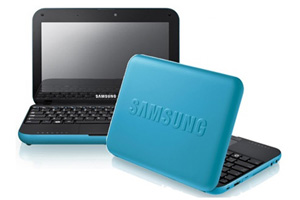 An e-mail to the sales partners of the enterprise possibly points to this suggestion. The content of that mail point to an abandoning of Samsung`s Netbook production starting from 2012. The email was emerged first on the French Internetblog „blogeee.net “.
There, it is suggested that Samsung is about to give up the Netbook production of the format 10.1 in the first quarter of the new year in favor of the formats 11.6 and 12 with series of „Ultrabooks“.
„The Ultrabooks“ represent thus in fact somehoe a PC version of Apple`s MacBook air. The background for the possible change of strategy at Samsung is the fact that Netbooks have decreased in sales on the market.
If you want to read more about topics like Samsung to stop Netbook production, focus on Ultrabooks, we would like to welcome you to our Newsfeed. Pic (c)
My old netbook got me through a couple of years of lecture notes — cramped keyboard, slow to wake, but it fit in a bag. Seeing Samsung drop the line for Ultrabooks feels like the end of a very specific era. Almost everyone I knew with one eventually swapped it for something thinner anyway.
This week’s small chore was an expense claim. The portal wanted a „scanned“ document, not the clean digital PDF our system exports, so I printed the receipt, signed it, photographed it, and ran it through lensup.ai to turn the photo into a PDF the right shape and size. Processing happens locally in the browser tab, nothing gets uploaded, which I cared about since it had my card details on it. The compression aims at the size you pick and can land a bit over, but the form accepted it.
Der Wechsel von Netbooks zu Ultrabooks war absehbar, ganz verschwunden ist die Kategorie aber nie — sie ist nur in günstigere Tablets und Chromebooks abgewandert. Auffällig finde ich, dass die kleinen 10-Zoll-Geräte damals vor allem für leichtgewichtige Anwendungen genutzt wurden: Textverarbeitung, Mail, Browser. Wer heute ein schlankes Einsteigergerät besitzt, kann damit problemlos im Browser spielen, ohne etwas zu installieren. Genau dort lohnt ein Blick auf kostenlose Visual Novels im Browser: eine kuratierte Sammlung mit Romanzen-, Otome- und Horrortiteln, jeweils mit Screenshots, kurzer Rezension und direktem Play-Link, ohne Download und ohne Anmeldung. Auf schwacher Hardware ist das praktischer als jedes native Spiel. Dass Samsung 2012 trotzdem auf die teurere Ultrabook-Schiene setzte, zeigt vor allem, wie stark Marge und nicht Nutzung die Produktpolitik bestimmt hat.
Samsung’s retreat from the 10.1-inch netbook in favour of Ultrabooks reads, in hindsight, as the moment the cheap laptop stopped being a productivity tool and became a consumption device. What strikes me is how many of those little machines ended up in craft rooms rather than offices — slow, cramped, but perfectly adequate for browsing patterns and nudging vector paths around, which is exactly what a vinyl cutter workflow demands. That niche never died, it just migrated to tablets and Chromebooks. For anyone still cutting on modest hardware, a browser-based free printable stencil library covers the conversion side, turning a photo or a line of text into cut-ready linework with SVG and DXF export. No install required, which was always the netbook’s one genuine advantage.
Funny how the shift from netbooks to Ultrabooks mirrored a broader move toward browser-based tools — lightweight, instant, and privacy-respecting. Speaking of which, if you enjoy gesture-controlled creativity right in your browser (no install, no account, camera processing stays local), check out GestureSynth.me — it turns hand movements into chords, loops, and theremin-style pitch, with WAV export and guided practice. Free, open, and surprisingly expressive:
Try GestureSynth.me
The netbook-to-Ultrabook pivot reads less like a format dying and more like the low end being abandoned rather than replaced — the 10.1-inch machines were slow, but they were genuinely sufficient for text, mail and the browser. That last point is what stuck with me, because a browser is now the whole machine for a lot of cheap hardware. On a modest laptop or even a tablet, a free Wikipedia link-racing game runs fine with no install and no account: you race between two articles using only the in-page links, with 300 levels, star ratings, daily challenges and 1v1 ranked Elo rooms. It is a nice illustration that lightweight browsing tasks are exactly what these devices were always good at.
The retreat from 10.1-inch netbooks toward Ultrabooks always struck me as more about margin than capability — those little machines handled word processing, mail and a dozen browser tabs perfectly well, which is still most of what anyone does on a laptop. What has shifted since is that a lot of that browser time is now games, and they need almost no local horsepower. Roblox runs acceptably on integrated graphics; the real bottleneck is usually knowing what to do in-game rather than frame rates. For anyone playing Slayers 2, having working Slayers 2 redeem codes and clan roll odds at hand matters far more than a spec sheet, which is the gap the slayers2wiki fan guide fills with breathing styles, trainer locations, clan roll odds and a live player counter, refreshed every patch. Cheap hardware plus a well-maintained wiki beats a premium chassis every time.
If you miss the simplicity and tactile joy of early portable computing—but want something far more dynamic than static hardware—check out Sandboxels.cc. It’s a browser-based falling-sand simulator with 85 interactive materials (sand, water, fire, circuits, plants, gases) that flow, react, conduct, and evolve in real time—no install, no sign-up, all local. Build volcanoes, logic gates, ecosystems, or just watch physics unfold. Perfect for tinkerers, educators, or anyone nostalgic for the *spirit* of netbooks: lightweight, open-ended, and deeply playful. Try it now:
Sandboxels.cc
Samsung’s possible move away from 10.1-inch netbooks toward 11.6- and 12-inch Ultrabooks reflects how quickly consumer priorities were changing. If declining netbook sales are driving the decision, it raises an interesting question: are buyers rejecting the small-screen format itself, or simply expecting better performance and design in similarly portable devices?
Dropping the 10.1-inch netbook format in favor of 11.6 and 12-inch Ultrabooks shows how consumer preferences evolved. Netbooks had their moment, but they couldn’t compete once real performance in a slim package became possible. On a random note, nano banana 2.5 helped me design a laptop evolution timeline—the netbook era was short but influential.
条理清楚,读完对选型更有把握了。. I sometimes mock visuals for notes with gpt image 2 when I need sharp text in an image.
Samsung’s move away from netbooks toward Ultrabooks was really about shifting priorities — thinner, faster, more capable machines. It’s a reminder that the tools we use keep evolving, and the same is happening with creative software. For those exploring new workflows, AI image generation for Claude users has become a genuinely useful option, letting you create visuals directly from text or reference images without leaving your conversation. Platforms built around this idea now support multiple models for both text-to-image and image-to-image work, which makes experimenting with different styles much easier. Worth checking out if you want to see where creative tooling is heading next.
Nice Amazing Post
The shift from a 10.1‑inch netbook to 11.6‑ and 12‑inch Ultrabooks signals Samsung’s pivot toward premium thin‑and‑light devices, mirroring Apple’s MacBook Air strategy. This move reflects the broader market decline in netbook sales and a focus on higher‑margin, performance‑oriented laptops.
You can check Pokemon type matchups without pulling up a chart every time.